Hubei Jiutian Motorcycle Parts Co., Ltd
Address: No. 1, Xinghong Road, Hongmiao Community, Fucheng Sub-district Office, Anlu City, Xiaogan City, Hubei Province
Contact number: 0712-5250699
0712-5251699
Hubei Jiutian Motorcycle Parts Co., Ltd
Address: No. 1, Xinghong Road, Hongmiao Community, Fucheng Sub-district Office, Anlu City, Xiaogan City, Hubei Province
Contact number: 0712-5250699
0712-5251699
Fasteners are a widely used type of mechanical component. They can be found in various machines, equipment, vehicles, ships, railways, bridges, buildings, structures, tools, instruments, meters, and supplies. They are characterized by a wide range of varieties and specifications, varying performance and applications, and a high degree of standardization, serialization, and generalization. Therefore, some people refer to a type of fastener that has an existing national standard as a standard fastener, or simply as a standard part.
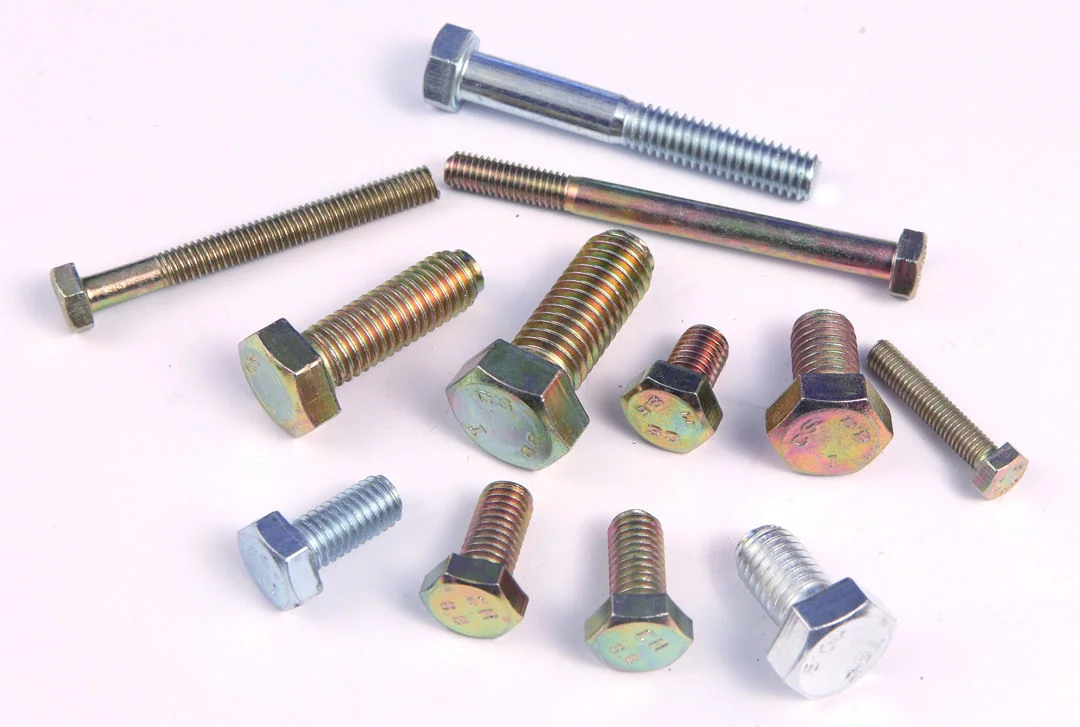
Fasteners include: studs, nuts, washers, and pins
Seizing or galling often occurs on fasteners made of stainless steel, aluminum alloy, and titanium alloy materials. These metal alloys inherently possess corrosion resistance, and when their surfaces are damaged, a thin oxide layer forms on the metal surface to prevent further corrosion. When stainless steel fasteners are tightened, the pressure and heat generated between the threads can damage this oxide layer, causing blockage or shearing between the metal threads, which in turn leads to galling. When this phenomenon persists, it can result in the stainless steel fasteners becoming completely seized, making it impossible to remove or continue to tighten them. Typically, this sequence of actions—blockage, shearing, galling, and seizure—occurs in just a few seconds. Therefore, a correct understanding and use of these types of fasteners is essential to prevent this phenomenon.
1. Choose the right product
Before use, confirm whether the mechanical properties of the product can meet the usage requirements, such as the tensile strength of the screw and the guaranteed load of the nut. The length of the screw should be appropriately selected, based on the principle of exposing 1-2 thread pitches of the nut after tightening.
2. Before use, check whether the threads are rough and whether there are iron chips or dirt between the threads, as these can often cause the lock to jam.
3. Before use, lubricate the fasteners
It is recommended to use butter, molybdenum disulfide, mica, graphite, or talcum powder for lubrication. Currently, wax immersion treatment is commonly used for lubrication and anti-seizing purposes.
4. Pay attention to the usage method when using
a. The speed and force of screwing in should be appropriate, avoiding excessive speed and force. It is advisable to use torque wrenches or socket wrenches as much as possible, and to avoid using adjustable wrenches or electric wrenches. Excessive speed can cause a rapid rise in temperature, leading to locking.
b. Regarding the direction of applying force, the nut must be screwed in perpendicular to the axis of the screw.
5. Using a washer can effectively prevent the issue of overtightening when locking.